
Ensuring clean, reliable drinking water for a community is a monumental task. For municipalities across the Great Lakes region and beyond, drawing water from vast surface sources like Lake Michigan presents unique challenges. Recently, Underwater Construction Corporation (UCC) partnered with the City of St. Joseph, Michigan, to tackle a significant blockage in their primary water intake, demonstrating the critical role of specialized commercial diving and proactive municipal water intake maintenance.
UCC has been a trusted partner for the City of St. Joseph for over a decade, performing annual inspections of their raw water intake structure and tunnel. These routine assessments are crucial for identifying issues before they escalate. However, as Nick Stathakis, Midwest Sales and Business Development Manager, and David Harner, Corporate Safety Compliance Officer, explain, this year presented an unexpected and formidable challenge.
The Challenge: St. Joseph’s Blocked Lifeline
St. Joseph’s water supply relies on a sophisticated system: a 48-inch main tunnel extending a mile offshore into Lake Michigan, which then splits into a ‘Y’ junction leading to two intake structures (North and South). This design allows water to travel to the filtration plant, providing potable water to the city.
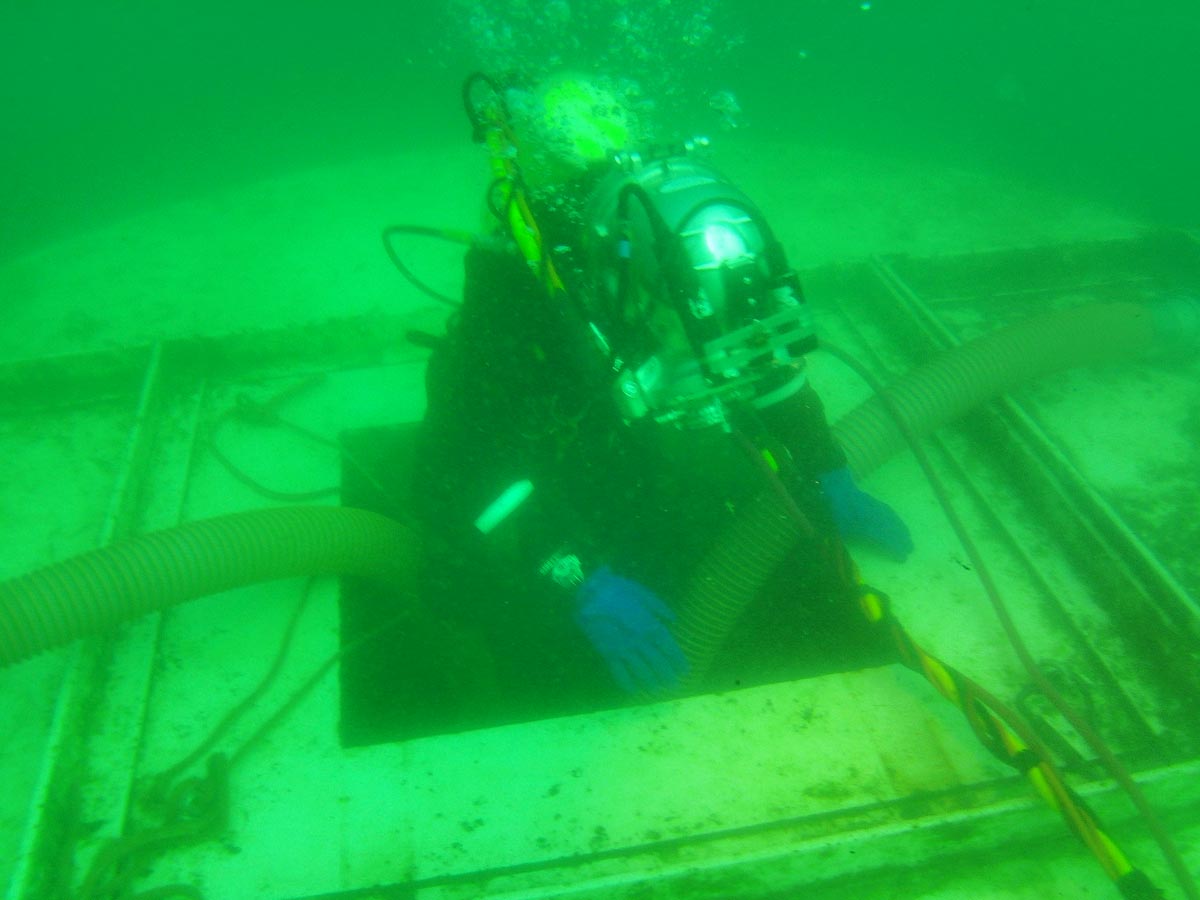
During a routine inspection, UCC divers discovered an alarming issue: significant accumulation of glacial till, sand, sticks, seagrass, and invasive zebra mussels. “The tunnels were well over 50% blocked towards the intake structure, and the main line itself was half full,” Stathakis explained. “This drastically reduced the water utility’s capacity, posing a threat to the city’s water supply, especially with the growing population in Southwest Michigan.”
As reported by local media, this blockage was a significant concern for the community. The urgency of the situation prompted the City of St. Joseph to secure emergency funding, sole-sourcing the critical work to UCC. Being a local company with its Midwest home port right in St. Joseph and as the largest diving firm in the country, UCC was the economical and expert choice for immediate intervention.


UCC’s Solution: Precision Diver-Assisted Dredging
Addressing a blockage of this magnitude requires highly specialized techniques. UCC employed diver-assisted dredging, a method chosen for its precision and minimal disruption to the city’s operations.
Unlike alternatives such as internal pipe pigging or high-velocity flushing, diver-assisted dredging allowed the city to maintain operation of the system. “We only had to isolate the system when divers were actually in the tunnels,” Harner noted. “At the end of each shift, we could give full control of the system back to the City of St. Joseph, allowing them to operate as normal.” This flexibility is a significant benefit for municipalities, preventing extended service interruptions.
The project is a two-season endeavor, with the first phase successfully completed. Key metrics from the initial season include:

All work was conducted over a mile offshore, leveraging UCC’s vessels and local expertise.
The Unseen Expertise: The Art of Penetration Diving
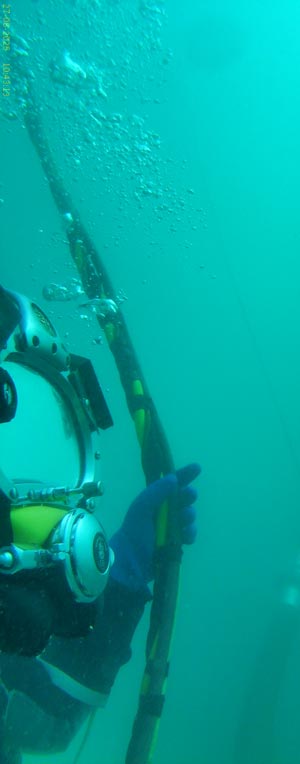
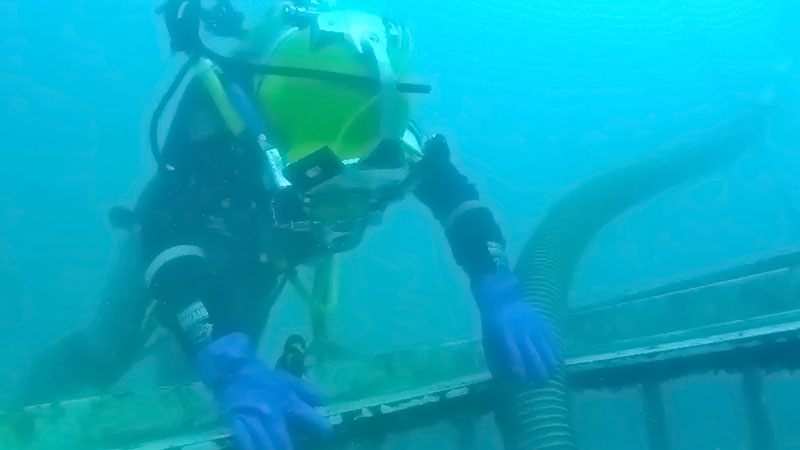
What truly sets UCC apart in these critical municipal water intake maintenance projects is the specialized skill of penetration diving. With water depths of 55 feet, divers enter the 48-inch tunnel, sometimes traveling up to 775 feet from the entrance with no direct ascent to the surface. This is a high-risk, meticulously planned operation.
“A diver is removing materials from about three football fields in length, and has to exit the same way they entered,” explains Stathakis. “It requires an in-water tender at the entry point, maintaining the main diver’s umbilical, supported by a full crew on our custom vessels – tenders, standby divers, pump operators, and a dive supervisor.”
This rigorous approach, combined with extensive safety plans, procedures, and equipment, ensures maximum diver safety in low visibility and confined spaces. It’s not just a dive; it’s a testament to the mental fortitude and extensive training of UCC’s commercial divers.
A Partnership for the Community and the Future
“It was indeed a partnership to be successful here,” Harner emphasized. “This project goes beyond just clearing debris; it represents UCC’s deep commitment to the communities we serve. As local residents and water consumers, our team takes immense pride in safeguarding their own backyard. This local work also provides a valuable opportunity for our divers to work in their home community during the summer, a welcome change from extensive travel.”
UCC anticipates removing nearly 1,000 cubic yards of debris across both phases, restoring the intake to its full capacity. The project highlights a critical takeaway for other city managers and public works directors: to increase preventive maintenance schedules, select experienced and safe contractors like UCC, and foster a strong partnership between the municipality and utility. Annual inspections, coupled with timely interventions, are far more economical and effective than reactive emergency repairs.
UCC looks forward to the second season in summer 2026, continuing this vital partnership with the City of St. Joseph. Deep appreciation is extended to the crew of divers, tenders, captains, and site supervisors for their exceptional dedication and for making the first season a resounding success.


Leverage the Expertise of UCC for Municipal Water Intake Maintenance
UCC’s ability to execute complex operations like penetration diving and diver-assisted dredging while maintaining system operational flexibility sets the standard for critical municipal water intake maintenance. Committed to fostering these essential long-term partnerships, we help ensure your community’s water infrastructure remains safe, efficient, and reliable for generations to come.
Learn more about our comprehensive services for hydro, power, and water utilities and explore how UCC can develop a proactive inspection and maintenance plan for your facility. Contact us today to secure the health and capacity of your water system.