Underwater Nuclear Welding

UCC brings decades of specialized experience in underwater nuclear welding, supporting safety-related repairs and modifications throughout the nuclear industry. Using qualified welding procedures and personnel, we perform work on reactor components and carbon and stainless-steel structures in suppression pools, condensate storage tanks and other safety-related water storage basins.

Underwater nuclear welding enables the repair and modification of submerged components in reactor cavities, spent fuel pools, cooling water systems and other plant infrastructure, often without draining the work area. Applications include structural supports, piping attachments, equipment mounts, gates and other submerged assemblies. Each project requires welding procedures, qualified personnel and equipment suited to the material, environment and applicable code requirements. Depending on the application, work may involve wet welding or welding within a dry habitat, supported by radiation protection consistent with ALARA principles, contamination control, electrical safety measures and appropriate nondestructive examination (NDE) to verify weld quality.
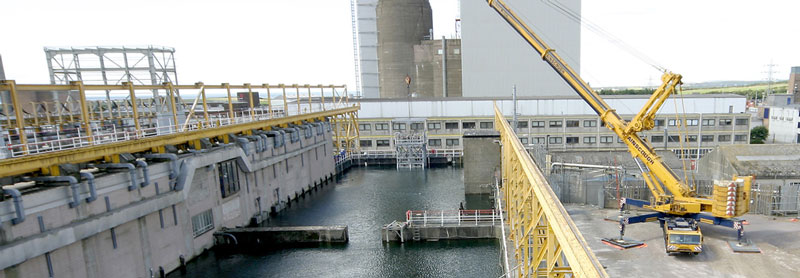
Globally, UCC has completed hundreds of nuclear underwater welding projects on facilities across North America, Asia, and Europe. Our qualified welding procedures and experienced nuclear welders support work on carbon and stainless-steel components, and we offer a unique test tank mock-up process for certain projects – testing the safety, efficiency, and effectiveness of our operations in dedicated UCC tanks – before divers ever enter your nuclear facility.

Send a Message

"*" indicates required fields

First Name*
Last Name*

  • In-vessel welding cladding repair

  • Core spray tee Box modifications and repairs

  • Feedwater sparger modifications, repairs and replacement
  • Steam dryer modification and repairs

  • Spent fuel pool leak detection and weld repairs

  • Seismic support modifications

  • Fuel pool liner installation

  • Spent fuel pool modifications
  • Moisture separator modification and repairs
  • Transfer cart modification and repairs

  • Safety-related pipe hangers and support modifications

  • Traveling water screen repair

  • Trash rack and gate repair

Qualified Underwater Nuclear Welding Procedures and Testing

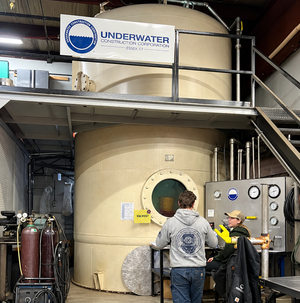
UCC qualifies nuclear underwater welders and welding procedures in our pressurized wet pot chamber to simulate exact production welding depths. This controlled testing environment allows UCC to validate welding procedures, train personnel, and demonstrate performance before field execution.

Located in Essex, Connecticut, UCC’s underwater hyperbaric welding facility is one of the largest facilities dedicated to underwater welding. The facility was designed exclusively for the nuclear underwater welding industry and can simulate welding conditions at depths up to 95 feet. It allows customers and quality control personnel to observe welding activities through a dedicated viewing port.

With the top nuclear industry welders, UCC’s specialized maintenance support includes underwater nuclear welding procedures qualified in accordance with ASME Section IX, ASME Section XI, IWA 4660 (formerly Code Case N-516) and AWS D3.6. The ASME procedures are qualified for all position groove welds on stainless steel plate and pipe, and the welders are qualified for groove and fillet welds to those procedures. UCC has qualified carbon steel welding procedures to ASME Section XI IWA 4660, P1 to P1 base metal using an E309L-16 filler. The procedures were qualified for metals with a carbon equivalent of up to 0.525.
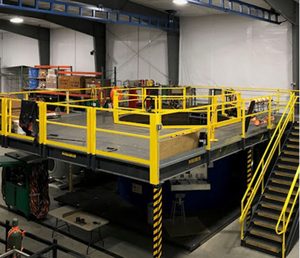
Nuclear and Underwater Welding Test Tank
Underwater Construction Test Tank

Compliance with Welding Codes, Standards and Qualifications

UCC’s underwater nuclear welding procedures and welder qualifications are developed in accordance with recognized industry standards and quality assurance protocols. In addition to ADCI certification, our divers operate compliant to a variety of codes, standards, and procedures including:

Applicable codes and standards include:

  • ASME Section IX – Welding, Brazing, and Fusing Qualifications
  • ASME Section XI – Rules for Inservice Inspection of Nuclear Power Plant Components
  • IWA 4660 (formerly Code Case N-516)
  • AWS D3.6 – Specification for Underwater Welding
  • 10 CFR 50 Appendix B Quality Assurance requirements
  • NQA-1 and ANSI N45.2 quality assurance requirements

Qualified welding procedures and materials include:

  • All-position groove and fillet welds on stainless steel plate and pipe
    Carbon steel welding procedures to ASME Section XI IWA 4660 using E309L-16 filler metal for P1 to P1 base metals
  • Qualified carbon steel welding procedures for carbon equivalents up to 0.525
  • Mild carbon steel welding procedures using an E7014 filler metal in accordance with AWS D3.6 requirements for carbon equivalents up to 0.495

Welding qualification documentation includes:

  • Welding Procedure Specification (WPS): Documents the approved welding parameters and requirements in accordance with ASME Section XI, IX and/or AWS D3.6.M.
  • Procedure Qualification Records (PQR): In accordance with applicable welding codes, a welder produces a test coupon, and the coupon is tested in accordance with ASME or AWS acceptance criteria. If the test is successful, then the PQR document serves to prove that the WPS is valid.
  • Welder Performance Qualification (WPQ): Once the WPS has been certified, welders may test and become certified to weld within the parameters indicated on the WPS. They weld a test coupon, which is then tested in accordance with ASME or AWS criteria. If the test passes, the WPQ document serves as the documentation and that welder’s successful completion and certification.

Quality assurance documentation includes:

  • Quality assurance manual: Governs the overall application of UCC’s nuclear quality assurance program in accordance with 10CFR50, Appendix B, NQA-1 and ANSI N45.2.
  • General Welding Procedure: Governs shielded metal arc welding qualification requirements for wet and dry welding applications.
  • General Welding Performance Qualification: Governs the qualification process for all welders. Performing dry and wet welding.

Integrated Nuclear Underwater Capabilities

Underwater nuclear welding is one part of UCC’s broader nuclear services capabilities. As the first commercial diving company to specialize in nuclear services for power plants, UCC combines qualified welding procedures, experienced nuclear divers, and specialized underwater construction expertise to support complex nuclear projects.

Explore more of our nuclear capabilities:
Frequently Asked Questions About Nuclear Underwater Welding

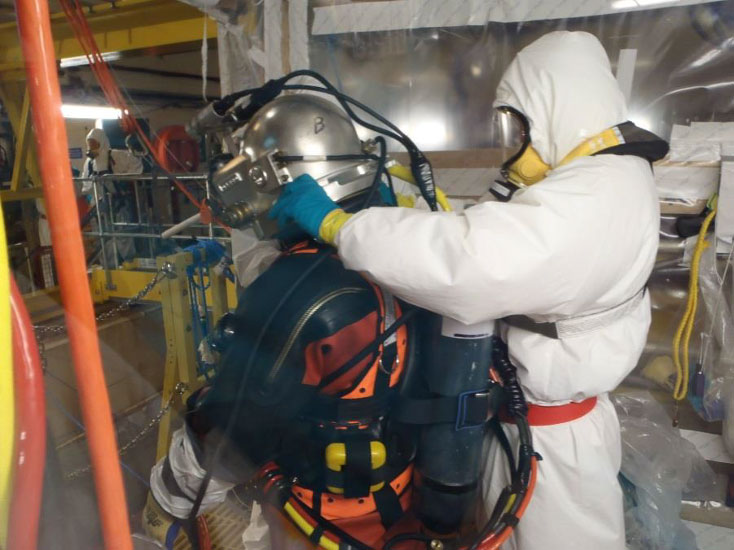
Underwater nuclear welding is a specialized process used to repair, modify and maintain submerged metal structures and components within nuclear power plants. Qualified commercial divers trained in nuclear welding perform repairs on critical infrastructure such as reactor components, spent fuel pools, suppression pools, condensate storage tanks and other safety-related systems using procedures that meet applicable industry and regulatory standards. Underwater nuclear welding utilizes unique equipment, procedures, and processes to increase safety as comply with nuclear operation requirements.
Underwater nuclear welding helps maintain the structural integrity and safe operation of critical nuclear power plant infrastructure without requiring extensive system drainage or prolonged outages. By allowing qualified personnel to perform repairs and modifications on submerged components, underwater welding can help reduce outage durations, minimize radiation exposure, improve plant reliability, and extend equipment life.

Underwater nuclear welding can be used to repair and modify a wide range of submerged components within nuclear power plants. Depending on the application, qualified welding procedures may be used on:

  • Reactor vessel components
  • Suppression pools and chambers
  • Condensate storage tanks
  • Spent fuel pool liners and structures
  • Feedwater spargers
  • Steam dryers and separators
  • Seismic supports
  • Safety-related piping supports and hangers
  • Traveling water screens and intake structures

The appropriate welding approach depends on the component design, base material, accessibility, and applicable nuclear codes, standards, and quality requirements.

UCC performs a wide range of underwater nuclear welding projects that support the maintenance, modification, and repair of safety-related systems at nuclear power plants. Our capabilities include:

  • Reactor component repairs
  • Spent fuel pool leak detection and weld repairs
  • Fuel pool liner installation
  • Feedwater sparger modifications, repairs and replacement
  • Steam dryer modifications and repairs
  • Steam separator modifications and repairs
  • Core spray tee box modifications and repairs
  • Seismic support modifications
  • Safety-related pipe hanger and support installation
  • Traveling water screen repairs
  • Trash rack and gate repairs
  • In-vessel welding cladding repairs

Each project is performed using qualified underwater nuclear welding procedures and documented quality assurance processes designed to meet the rigorous requirements of the nuclear industry.

UCC qualifies underwater nuclear welding procedures and welders using controlled testing environments designed to simulate field welding conditions. Its underwater hyperbaric welding facility allows welding procedures and welder performance to be evaluated at simulated production depths before work is performed in the field.

UCC performs underwater nuclear welding in accordance with recognized nuclear industry and commercial diving standards, including ASME Section IX, ASME Section XI, IWA 4660, and AWS D3.6. We maintain qualified Welding Procedure Specifications (WPS), Procedure Qualification Records (PQR), and Welder Performance Qualifications (WPQ), supported by a nuclear quality assurance program compliant with 10 CFR 50 Appendix B, NQA-1, and ANSI N45.2. Our welders and welding procedures are qualified in a dedicated hyperbaric testing facility that simulates production welding depths, helping ensure safe, reliable, and code-compliant performance in underwater nuclear environments.

UCC develops and qualifies underwater nuclear welding procedures in accordance with recognized industry codes and standards, including:

  • ASME Section IX
  • ASME Section XI
  • IWA-4660 (formerly Code Case N-516)
  • AWS D3.6M
  • 10 CFR 50 Appendix B Quality Assurance requirements
  • NQA-1 and ANSI N45.2 quality assurance requirements

These codes, standards, and quality requirements help ensure welding procedures, personnel qualifications and documentation meet the quality expectations required for nuclear applications.

UCC ensures quality and safety through qualified welding procedures, experienced nuclear welders, specialized equipment, and documented quality assurance processes. Its underwater nuclear welding activities are supported by a NUPIC-audited 10 CFR 50 Appendix B Quality Assurance (QA) Program, which establishes controls for procedures, personnel qualifications, material traceability and project documentation.

UCC combines nuclear industry experience with commercial diving and underwater construction expertise to support safe, reliable execution of complex welding projects.

UCC combines more than three decades of underwater nuclear welding experience with specialized testing facilities, qualified procedures, and experienced nuclear welding personnel. Its hyperbaric welding facility in Essex, Connecticut, allows UCC to simulate underwater welding conditions and qualify procedures before field deployment.

As the first commercial diving company to specialize in nuclear services for power plants, UCC provides integrated underwater construction, inspection, maintenance and welding capabilities to support complex nuclear projects.

Yes. UCC maintains a fleet of remote operated vehicles (ROVs) that can be deployed based on the specific requirements of each nuclear project. ROVs are used for pre-weld surveys, visual inspections before and after welding operations, and to assist divers during maintenance and repair activities. Each ROV is selected to meet the project’s operational, electrical, environmental, and spatial requirements – providing safe access to confined or high-radiation areas while supporting efficient, high-quality underwater welding operations.

UCC has been a leader in underwater nuclear services for more than five decades. In 1973, the company conducted the first recorded radiological dive at the Yankee Rowe Nuclear Power Station, helping establish many of the practices that continue to shape underwater work in nuclear facilities today. Since then, UCC has continually expanded its capabilities by developing specialized procedures that enhance safety, improve operational efficiency, and maintain compliance with the rigorous standards of the nuclear industry.

Over the decades, UCC has successfully completed hundreds of underwater nuclear welding projects and has invested heavily in specialized diver training, including test tank exercises that simulate nuclear plant environments, comprehensive safety programs, and project-specific planning. Our experienced divers, project supervisors, and leadership team are widely recognized throughout the industry for their technical expertise, commitment to quality, and leadership in underwater nuclear welding and maintenance.

Experience the UCC Advantage

The expertise of our nuclear divers, combined with state-of-the-art equipment, deliver the highest standards of quality, integrity and safety in every welding project. Reach out to our experts to discuss your underwater nuclear welding needs and together, we will optimize the performance of your nuclear facility.

Send a Message

"*" indicates required fields

First Name*
Last Name*